
Subscriptions, billing, line activation, customer portals, mobile apps, cloud services: at an operator, millions of subscribers depend on an application portfolio built by in-house teams, integrators and software vendors. Every new offer changes it. Measuring the quality of this code means keeping control of a whole that nobody wrote alone.

At an operator, a software error shows up for millions of subscribers at once.
Plans, options, discounts, roaming: every new offer touches a billing engine that must stay accurate to the cent.
Activating a line, a fiber connection, a SIM card: processing chains across systems that tolerate no lost step.
Customer account, mobile app, online store: millions of users, frequent updates.
In-house teams, integrators, software package vendors: the code comes from everywhere, with different habits.
Emergency calls must get through, even in degraded mode; a software outage interrupts service for everyone.
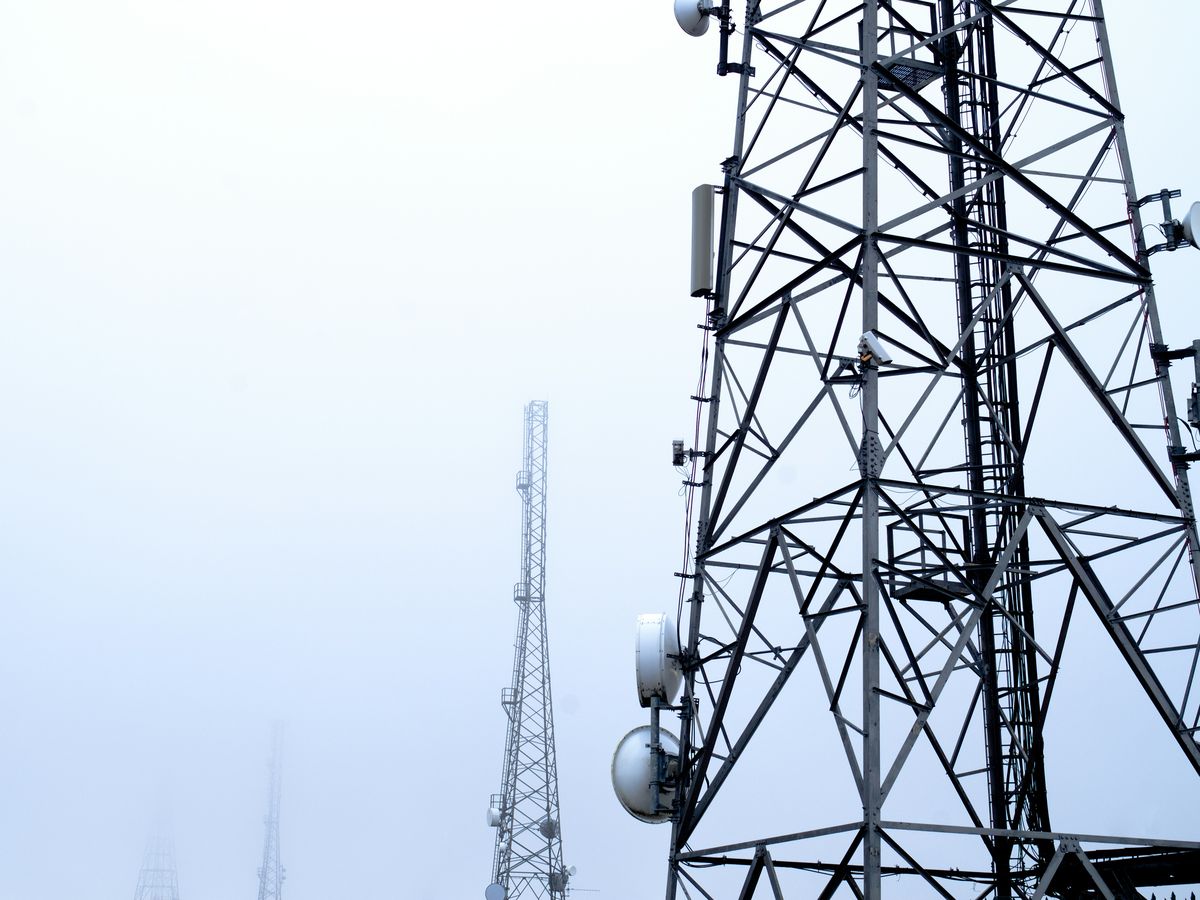
The portfolio combines billing and customer relationship systems, network operations systems, portals and mobile apps, and the interfaces connecting them.
Cybersecurity, products supplied to subscribers, cloud, data: operators are among the most regulated.
Providers of electronic communications networks and services, cloud, data centers and managed services fall under NIS2: risk management, supply chain security, incident notification. Since October 18, 2024, the operators' security obligations of the European Electronic Communications Code have been brought together there. In France, the transposition law is still being debated in Parliament.
Routers, set-top boxes and apps supplied to subscribers are products with digital elements. Reporting of actively exploited vulnerabilities has applied since September 11, 2026, the other obligations from December 11, 2027.
Since September 12, 2025, Regulation (EU) 2023/2854 requires cloud service providers to let their customers switch provider: data export, open and documented interfaces. Switching charges disappear on January 12, 2027.
Traffic, location and billing data: the ePrivacy directive governs the confidentiality of communications, the GDPR the processing of subscriber data.
Banks and insurers must write security requirements into their contracts with ICT providers, including their operators and cloud providers.
See Software composition and Cyber Resilience Act and IEC 62443.
Every change to the billing engine, the activation chains or the apps is checked before it is merged: coding rules, vulnerabilities, complexity, test coverage.
One quality model for in-house teams, integrators and vendors, a minimum level written into the contract, a measurement at each delivery. See the TQI quality audit.
Knowing the open-source libraries of each application and of each product supplied to subscribers, and their known vulnerabilities: supply chain security starts there. See Software composition and CRA.
A rating per application, tracked over time, to decide what to rework before the next offer. See the Technical debt guide.

TiCS brings together in the same dashboard the results of the analyzers on the code of billing systems, activation chains, portals, mobile apps and products supplied to subscribers: Java, C#, C, C++, Python, JavaScript, TypeScript, Kotlin, Swift, Go, PL/SQL… It checks each change before it is merged with its quality gates, rates each application from A to F with the TQI, and tracks its evolution from one version to the next.
TiCS does not make an operator compliant with NIS2: it provides, version after version, the measurement of the quality and security of the code, including the code delivered by suppliers.
TiCS on one of your applications, installed and configured by a Precilog consultant.
An independent assessment of code delivered by an integrator or of a purchased software package.
A recognized rating, compared with the market average.
The inventory of components and the SBOM, by TIOBE.
A TiCS proof of concept on an application of your choice, developed in-house or delivered by a supplier, installed and configured by a Precilog consultant.
TiCS · TQI quality audit · Maintainability certification · Software composition and CRA · Technical debt · Software vendors and SaaS · Home automation and IoT
Sources: Directive (EU) 2022/2555 (NIS2); Directive (EU) 2018/1972 (European Electronic Communications Code); Regulation (EU) 2024/2847 (Cyber Resilience Act); Regulation (EU) 2023/2854 (Data Act); Directive 2002/58/EC (ePrivacy) and Regulation (EU) 2016/679 (GDPR); Regulation (EU) 2022/2554 (DORA).
Photos: Mario Caruso, David Arrowsmith, Taylor Vick, İsmail Enes Ayhan (Unsplash).